Local newsrooms don’t have the luxury of a dedicated breaking news team.
When something happens in the community, a fire, road closure, school situation, weather event, or major public safety incident, the same people responsible for the afternoon broadcast may also be the ones who need to get the first social post out, monitor community response, coordinate with reporters in the field, and keep the rest of the day’s content moving. Speed matters in breaking news. So does accuracy.
For local newsrooms, the tools that support both have to work without a learning curve, from any device, the moment something breaks. That means reducing unnecessary steps, keeping the team coordinated, and making it easier to publish verified information without losing control of the editorial process.
Social News Desk (SND) is built for exactly that environment.
What Local Newsrooms Are Actually Up Against
The breaking news challenge for local stations and digital newsrooms isn’t a strategy problem. It’s an infrastructure problem.
The workflow that works on a normal news day wasn’t designed to run at breaking news speed. Posting to multiple platforms requires multiple logins. Getting a graphic out may require a designer who is off-shift. Coordinating with a reporter in the field means the desk is managing a phone call and a publishing queue at the same time.
Meanwhile, scheduled content keeps running in the background while the team’s attention is entirely on the developing story. When the situation is resolved, there may be no easy way to review what went out, when it was published, or whether the messaging stayed consistent across every platform and account.
Local newsrooms aren’t falling behind during breaking news because of a lack of effort. They’re working around tools and workflows that weren’t built for the pace, staffing realities, and accountability of local news. That is where the right newsroom social media tools make a practical difference: not by replacing editorial judgment, but by removing friction from the work experienced journalists already know how to do.
Publishing First Without Getting It Wrong
The pressure to be first on a breaking story is real. So is the pressure to be right.
For local newsrooms, a correction or retraction can carry immediate consequences for community trust. Local journalists report on the places where their audiences live, work, send their children to school, and depend on timely information. That accountability doesn’t disappear when a story is moving quickly.
The discipline experienced local social media managers develop is not speed versus accuracy. It’s building a workflow that supports a fast, appropriately scoped first post without requiring details that have not yet been verified. A first post that says the right amount can establish the newsroom as a reliable source while reporting catches up. It may acknowledge the situation, direct the community to official information, and confirm that the newsroom is actively reporting, without filling gaps with speculation.
That approach gives the newsroom a responsible way to enter the conversation without ceding it to unverified social posts. SND’s breaking news social media publishing workflow supports that discipline. Teams can draft, review, and publish from a single interface across relevant platforms and accounts, reducing the time and attention previously spent navigating separate platform logins.
The goal is not to publish before the reporting is ready. The goal is to make sure the publishing workflow is ready when the reporting is.
Controlling Every Account From One Place
For local stations managing multiple social accounts (a main station handle, a news-specific account, weather, sports, and individual reporter profiles), breaking news creates an immediate coordination problem.
Who is posting what? Which accounts need the update? Is the social messaging consistent with what is going out on air? Has scheduled content been paused? Without a unified publishing interface, those questions are often answered through Slack threads, phone calls, text messages, and manual checks. Each one consumes attention the team needs for the story itself.
SND’s multi-account publishing gives the desk a single view of the station’s social portfolio, including what is scheduled, what is live, and what has been paused. The social media manager can publish a breaking update across relevant accounts, hold scheduled content, and hand off responsibility to a colleague without relying on a separate briefing call.
That matters when a newsroom is operating with lean staffing. The coordination overhead that used to live in the team’s heads moves into the platform, where it can be seen, managed, and shared. For local news social media management, that visibility helps the newsroom maintain a consistent public voice even when responsibilities are shifting quickly between the control room, assignment desk, digital team, and reporters in the field.
Monitoring the Community While the Story Develops
Breaking news on social media moves in both directions.
The newsroom is publishing updates and the community is responding, sharing information, asking questions, and sometimes surfacing details the reporting team does not have yet. For local newsrooms, community monitoring during a breaking story is both a reporting resource and a trust signal. Residents want to know their station is listening, not simply broadcasting.
SND’s listening tools keep community response visible alongside the publishing workflow. That means the social media manager does not have to constantly switch between a separate monitoring tool and the content creation interface. Keyword listening can surface relevant public posts from community members, first responders, public agencies, and other local accounts as a story develops. The newsroom can assess those signals, follow up through established reporting practices, and determine what is verified before publishing.
That distinction matters. Community response can help the newsroom understand what people are seeing and asking, but it does not replace reporting or editorial verification. When a story is moving quickly, keeping publishing and monitoring in the same workflow gives the team a clearer view of the conversation. It can help the newsroom respond to audience needs, identify useful leads, and avoid discovering too late that the community has moved on to questions the newsroom has not addressed.
For local TV news social media teams, that visibility can be the difference between leading the conversation and catching up to it.
What Local Newsrooms Tell Us They Need Most
In conversations with local newsroom social media managers, three capabilities come up consistently.
The ability to publish everywhere at once, without logging in everywhere at once.
Every minute spent navigating platform logins during a breaking story is a minute the community is waiting for an update from the newsroom. A single publishing interface that reaches relevant platforms and accounts is not simply a convenience. It is a baseline requirement for an effective local news digital workflow.
The goal is not to publish identical content everywhere without thought. Editorial teams still decide which accounts need an update, how the message should be framed, and what information is ready to share. The value is having those decisions executed through one coordinated workflow.
A content pause that works in seconds, from any device.
Scheduled content that continues running during a live breaking situation can become a credibility problem quickly. A promotional post or light feature may be completely appropriate when scheduled and completely out of place once the newsroom is covering a major emergency.
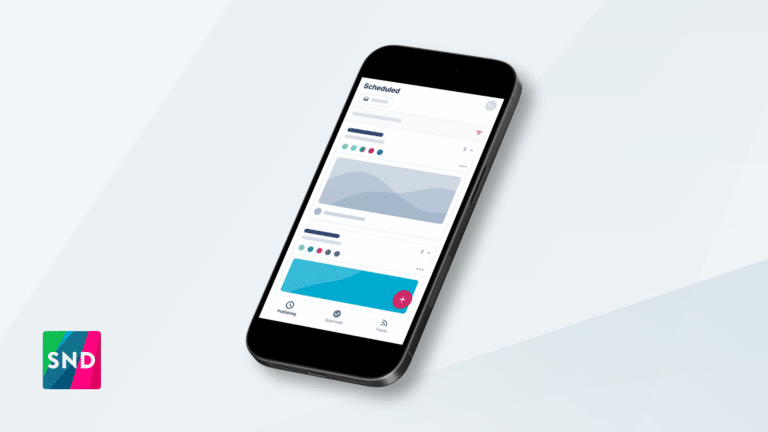
The ability to hold scheduled content with one action, whether from a phone in the field or a tablet in the control room, needs to be reliable before it is needed. In breaking news, a pause function is part of editorial control.
Support that picks up when something goes wrong late at night.
Breaking news does not keep business hours. Local stations need dependable support when the newsroom is operating with an overnight crew, an on-call producer, or a small digital team covering a major event.
SND provides U.S.-based customer support with real people who understand newsroom workflows. When the story is moving, teams need practical help, not a ticket that will be reviewed the next business day. Ready when the story breaks.
Built for the Reality of Local News
Local newsrooms earn their community’s trust one breaking story at a time.
The tools that support that work have to be as reliable as the journalists using them: fast enough to support breaking news publishing speed, structured enough to preserve editorial control, and dependable enough to perform at 2 AM when an on-call producer needs to get an accurate update out without opening a help desk ticket.
SND was built around the realities of local news: lean teams, limited budgets, multiple responsibilities, and a community that depends on the newsroom to get it right. The technology does not make the editorial decisions. It helps the people responsible for those decisions move with greater coordination and less friction.
Schedule a demo to see how SND supports local newsroom breaking news workflows.