For education communicators, summer isn’t a break — it’s a planning challenge. Reduced staffing, unpredictable schedules, and an audience that’s scattered and distracted make it genuinely hard to maintain the social media presence your institution has built all year.
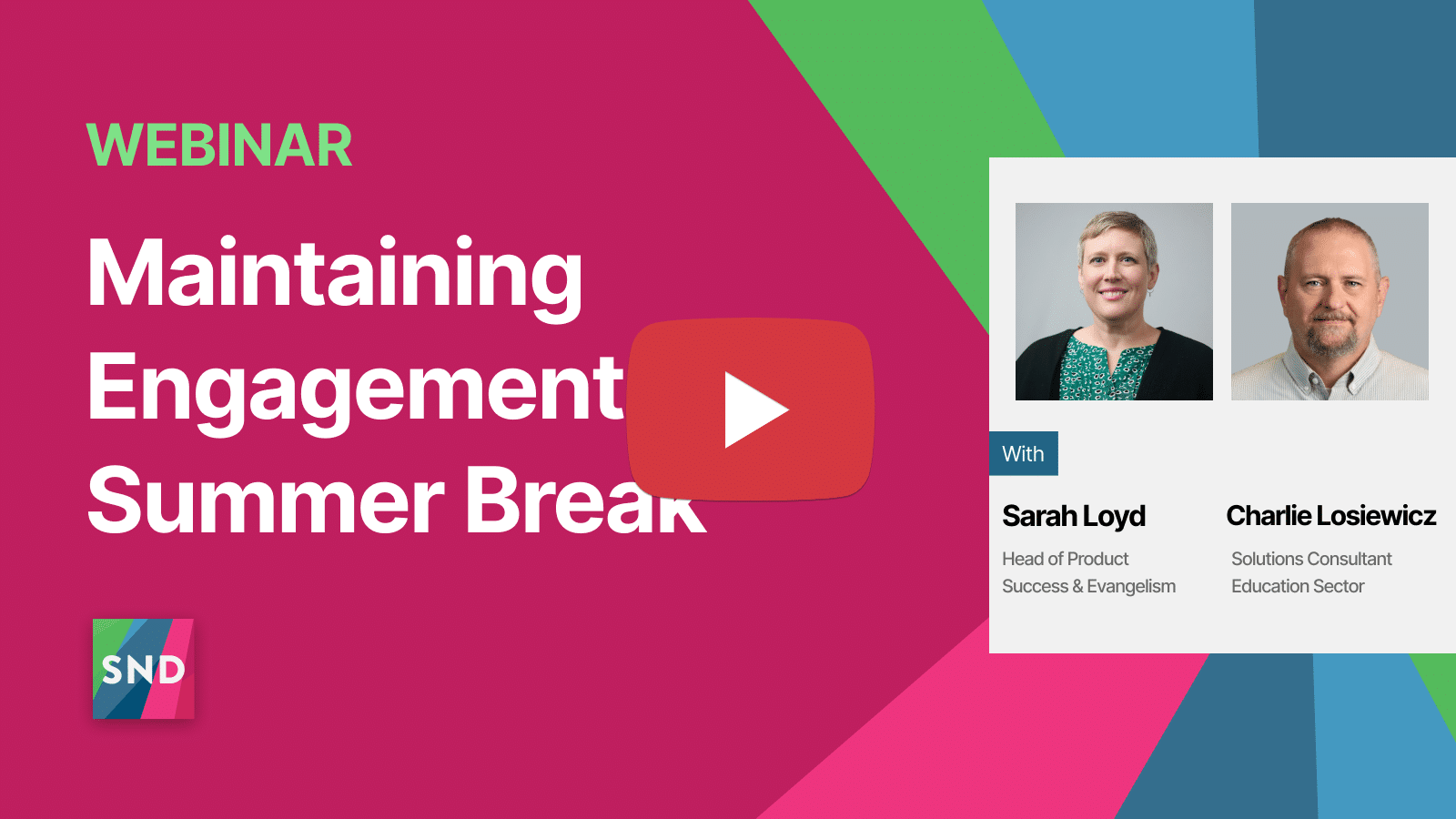
In our latest webinar, “Maintaining Engagement Over Summer Break,” Sarah Loyd, Head of Product Success and Evangelism, was joined by Charlie Losiewicz, SND’s Solution Consultant for Education, to walk through how K-12 and higher ed communicators can navigate the summer months without burning out or going dark.
Whether you’re a solo communicator at a school district or part of a larger university marketing team, here are the biggest takeaways.
The Core Challenge: Consistency With a Skeleton Crew
Summer is when the gap between what you know you should be posting and what you actually have capacity to post gets widest. Vacations overlap, approval chains get murky, and the usual rhythm of the school year disappears. The teams that handle summer best aren’t the ones with the most resources — they’re the ones who plan before the chaos starts.
The session was built around three questions every education communicator should be asking right now: How do you plan the May/June transition? How do you stay responsive when staff coverage is thin? And what content actually works when school isn’t in session?
Planning Ahead: The May/June Transition
Choose Your Approach — and Commit to It
Sarah and Charlie laid out three distinct strategies for managing summer content, and the right one depends entirely on your team’s situation.
Option 1: Schedule your entire summer. This approach works best for teams with predictable programming, minimal summer staff coverage, and a strong need for consistency. The idea is simple: batch-create content in May and schedule it out through August. The trade-off is flexibility — a pre-scheduled calendar can’t respond to a surprise story or a timely moment. But for a team that needs to actually take vacation, it provides real peace of mind.
Option 2: Stay reactive. If your institution runs active summer programs with adequate staff coverage and an unpredictable schedule, reactive posting may be a better fit. You post in real time based on what’s happening — which produces authentic, timely content. The downside is that it requires constant attention, makes true vacation difficult, and can lead to inconsistent posting if the real-time moments dry up.
Option 3: The hybrid approach. For most education teams, this is the sweet spot. Schedule evergreen content — enrollment information, recurring program announcements, throwback posts — and intentionally leave gaps for breaking news, real-time moments, and responsive content. The result is a calendar that provides consistency without sacrificing flexibility. Sarah noted that most schools land around 80% scheduled content and 20% reactive, though the right ratio varies by institution.
The key distinction to keep in mind: K-12 schools typically have longer summer breaks with a more dramatic drop in activity, while higher ed institutions tend to operate closer to a year-round business calendar with significant summer programming.
Staying Responsive: Managing Engagement With Limited Staff
Map Out Coverage Before Summer Arrives
Thin summer staffing is predictable, which means there’s no excuse for being caught off guard by it. The session pushed communicators to do several things before school lets out: map vacation schedules now, identify a primary and a backup for each coverage period, and set clear handoff procedures. “Don’t assume someone will handle it” is how Sarah put it — because in practice, nobody does.
Streamline Your Approval Process
One of the most common summer bottlenecks is approvals. If your superintendent or communications director is unreachable for two weeks in July and you haven’t pre-arranged a backup, your content pipeline stops. The recommendation from the session: identify which content categories can be pre-approved or require less formal review, set clear escalation paths for anything sensitive, and don’t let a single person become the bottleneck for all summer publishing.
SND’s Approvals feature is built exactly for this scenario — allowing teams to build review workflows directly into the dashboard so content can move through a defined chain without relying on email chains or text threads that fall apart when someone’s on a beach.
Get Your Crisis Plan in Writing Before You Need It
Summer is when crisis communication plans get tested. A social media incident during spring semester, when your full team is in the office, is manageable. The same incident in July, when half your team is on vacation and nobody knows who’s responsible, is a real problem.
The session emphasized having clear answers to three questions before summer begins: What qualifies as a crisis that requires an immediate social response? Who gets notified, and in what order? What is the approval chain when decision-makers are unavailable? Don’t wait for an emergency to work this out.
Set Expectations for Response Times
Social media audiences don’t stop asking questions in summer. The session’s advice: post your summer response times publicly so your audience knows what to expect, use auto-responses for common questions, and monitor without pressuring yourself to reply instantly to everything. Know in advance which messages need to escalate to a human quickly and which can wait until morning.
What Actually Works: Summer Content Strategies
Focus on Your Best Platforms
Summer is not the time to try to maintain a full presence on every channel. The recommendation was to identify your highest-performing platforms and concentrate your energy there, while reserving other platforms for reactive content or critical announcements that need broad distribution. LinkedIn was called out specifically as a platform worth maintaining in summer — particularly for higher ed and districts with hiring needs, since it’s one of the most effective tools for attracting staff and faculty.
Video content generally drives more engagement than static posts, but don’t let that become a production burden. Even simple, mobile-friendly clips filmed on a phone outperform no video at all. Whatever you post, keep it optimized for mobile — that’s where your audience is reading it.
A Season’s Worth of Content Ideas
The session covered a full calendar of summer content that actually resonates with education audiences across both K-12 and higher ed:
End of school year. Graduation highlights, senior celebrations, staff appreciation, and year-in-review content. These tend to perform extremely well because the subject matter is inherently shareable.
Alumni spotlights. “Where are they now” features humanize your institution and give alumni a reason to engage — especially valuable for higher ed accounts working to maintain alumni relationships during quieter months.
Fall enrollment. Summer is prime time for enrollment content. Prospective students and families are researching and making decisions, and a steady stream of program highlights, campus life content, and deadline reminders keeps your institution top of mind.
Professional development. Faculty and staff professional development happening over the summer is compelling content for your internal and external audiences alike. It signals that your institution is investing in its people.
Summer programs. For K-12, summer school, enrichment programs, camps, and sports are natural content opportunities. For higher ed, summer intensives, research programs, international experiences, and pre-college programs give you a consistent stream of stories to tell throughout the summer.
Summer on campus (higher ed). The campus doesn’t empty out in summer — it changes. Research, summer conferences, athletic programs, and move-in prep all generate genuine content. Behind-the-scenes looks at a quieter campus can actually be among the most engaging posts of the year.
School board meetings. Don’t let these disappear from your social calendar. Sharing what was discussed and decided — even briefly — keeps your community informed and signals accountability.
College move-in. For higher ed, move-in day content is among the highest-engagement posts of the year. Planning this content well in advance, including photo and video logistics, pays real dividends.
Back-to-school prep. August content for both K-12 and higher ed — supply lists, orientation schedules, campus maps, first-day information — is genuinely useful to your audience and generates strong engagement because people are actively searching for it.
Student orientation and involvement fairs. Welcome content for new students positions your institution warmly and gets shared widely by families.
How SND Helps You Put This Into Practice
Social News Desk is built for exactly the kind of summer workflow these strategies require:
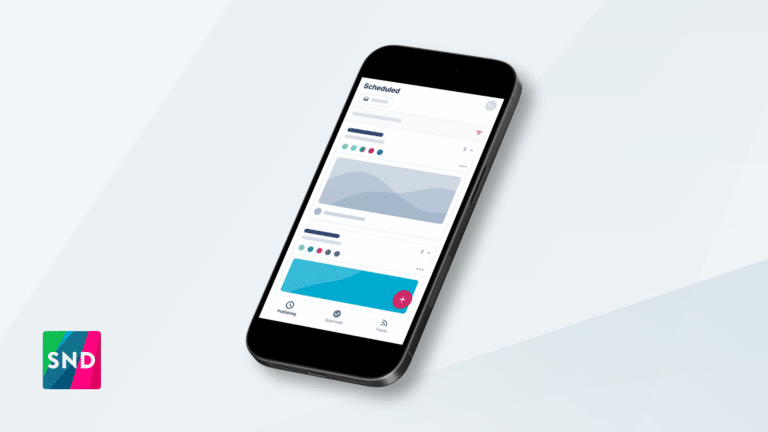
Calendar — Plan and schedule your entire summer content calendar from a single dashboard. Batch-create in May, fill the calendar through August, and leave designated gaps for reactive content. Spot holes before they become problems.
Approvals — Build your summer review chain directly into SND so content moves through the right people without email back-and-forth. Pre-configure approval categories so lower-stakes content can move faster when key approvers are on vacation.
Inbox — Pull comments and direct messages from all your platforms into one shared inbox so nothing gets missed during thin-staffed periods. Every message that comes in gets seen.
Reporting — See what’s resonating and what isn’t across all platforms in one place. Use summer performance data to build a sharper content strategy for the fall.
SND Archive — Automatically capture every post across your platforms for compliance and open records purposes — running quietly in the background whether your team is in the office or out.
For more on how Social News Desk supports education communicators, visit socialnewsdesk.com. Ready to see it in action? Start a free trial or request a demo at socialnewsdesk.com/demo.